Review from the 1st Ukrainian–European Science Diplomacy Forum on 12 March (Vienna)

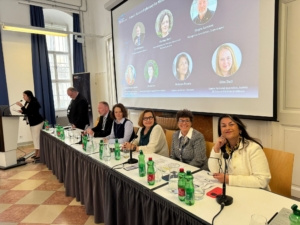
The 1st Ukrainian–European Science Diplomacy Forum, held on 12 March 2026, brought together a wide range of stakeholders from Ukraine, EU Member States, and the broader science diplomacy community, including many partners from our Alliance. The event highlighted both the strong political momentum and the growing operational landscape of science diplomacy in support of Ukraine’s recovery, resilience, and European integration. The Forum demonstrated that science diplomacy is not only a policy concept but an operational reality, already delivering concrete results across funding, mobility, education, and institutional cooperation. At the same time, it highlighted the importance of coordination, inclusiveness, and long-term commitment—with the Science Diplomacy Coalition emerging as a key platform to bring these efforts together.
Strong engagement from Austria and European partners
The Austrian community demonstrated strong interest and support, with the opening session of the Austrian Foreign Ministry outlining key priorities. These include the establishment of an office in Lviv, the expansion of educational programmes in health and medical sciences, the continuation of academic workshops, and a sustained focus on cultural diplomacy (including music). At the same time, there is a clear emphasis on structural integration into the European Research Area (ERA) and embedding Ukrainian actors more firmly in EU initiatives. As highlighted during the discussions, reconstruction will require time, expertise, solidarity, and strong institutions. The Ambassador of Ukraine to Austria underscored that scientific cooperation is a cornerstone for building a stable and secure future, pointing to strong mutual interest and already ongoing joint projects.
Expanding institutional and educational cooperation
Several institutions presented concrete initiatives strengthening bilateral and multilateral cooperation. The Austrian Diplomatic Academy highlighted its engagement with Ukrainian alumni, targeted training for officials, and the organisation of high-level events, including a workshop for First Ladies and Gentlemen initiated by the Ukrainian First Lady. It also reported on the development of a prototype seminar on Science Diplomacy.
The Ministry of Education and Science of Ukraine presented its dedicated Science Diplomacy initiative (launched in 2022), which focuses on building partnerships, strengthening global integration, and fostering international networks. A recent flagship initiative is the support of “Ukrainian Science Ambassadors.” EU accession remains a central priority, with science diplomacy playing a key role in this process. The possibility to join the international Science Diplomacy Coalition was repeatedly highlighted as an open and inclusive opportunity for a wide range of actors.
Funding, mobility, and international collaboration
The National Research Foundation of Ukraine (NRFU) outlined its strategic funding approach since 2020, addressing previous underfunding in the sector. Notable initiatives include the LUKE call, currently open with the participation of 13 funders, and “hop-on” schemes, allowing Ukrainian researchers to join ongoing international projects. Bilateral programmes, such as Norwegian support for mental health research, further illustrate the breadth of cooperation. The NRFU also called on the Ukrainian scientific diaspora to contribute as reviewers and evaluators.
The Fund of the President of Ukraine for the Support of Education, Science and Sports, established two years ago, focuses on empowering young talent and internationalising Ukrainian academia. Its “Leaders of the Future” programme and initiatives to bring leading international professors to Ukraine—including cooperation with the UK—demonstrate a strong forward-looking approach.
Science diplomacy as a strategic enabler
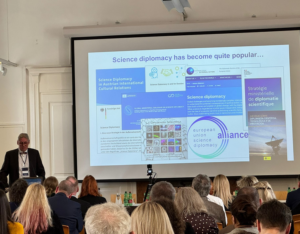
Across sessions, there was a clear consensus that science diplomacy is a key instrument for Ukraine’s recovery and integration. The Scientific Council of Ukraine emphasised the country’s readiness to share its expertise and highlighted the Coalition as a central platform to coordinate and scale efforts. International organisations reinforced this perspective. UNESCO highlighted the Coalition, particularly its UNESREALE initiative, which facilitates access to research infrastructures. The European Commission pointed to the ongoing development of a European Science Diplomacy Framework and forthcoming Council Recommendations, as well as the need to strengthen science expertise within Ministries of Foreign Affairs. Science diplomacy is also seen as essential for supporting Ukraine’s EU accession process, including technical alignment with the acquis.
The role of diaspora and communities
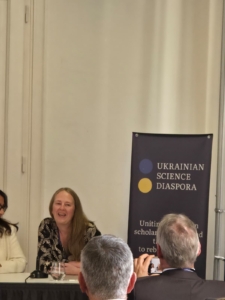
Ukrainian diaspora networks emerged as key actors in the science diplomacy ecosystem. Supported by national structures, they provide digital platforms, mentorship, partner search tools, and policy input, while also organising events and facilitating equipment donations. These networks are largely driven by voluntary engagement and strong female leadership, with a clear emphasis that demand from Ukraine should guide international support efforts.
Find out more about the organiser, Ukrainian Science Diaspora in Austria: https://uscida.at/