Report from the 13th Africa–Europe Science Collaboration Forum, 20–22 April 2026
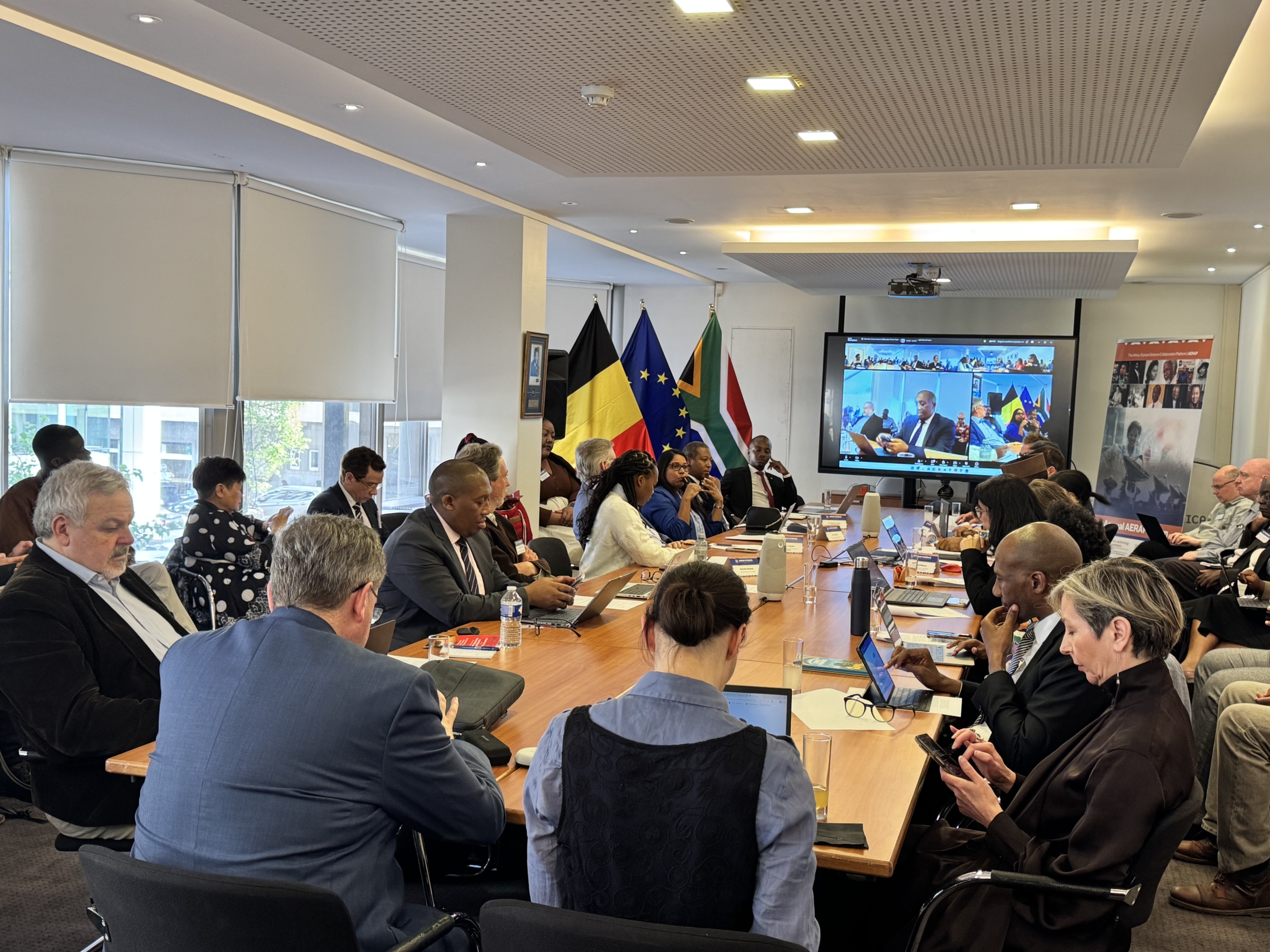
Towards a strengthened EU-Africa science diplomacy ecosystem
The 13th Africa–Europe Science Collaboration Forum in Brussels (20–22 April 2026) showcased how science, technology and innovation are increasingly central to the political and financial partnership between the two continents, with science diplomacy emerging as a core strategic theme across the three-day programme.
Setting the scene: science for a shared future
Hosted by the Africa–Europe Science Collaboration Platform (AERAP), the Forum took place at a pivotal moment as the EU prepares its next Multiannual Financial Framework for 2028-2034, positioning research and innovation as levers for a “sustainable shared future.” High-level discussions linked Horizon Europe, the Global Gateway, Agenda 2063 and the UN Sustainable Development Goals, underlining science as a cornerstone of Africa–Europe relations. Over three days, participants from governments, research organisations, multilateral institutions, industry and civil society explored how joint investments, inclusive research ecosystems and aligned policies can support technological transformation, resilience and equitable development across both continents.
Science diplomacy at the core of Africa–Europe cooperation
A dedicated Science Diplomacy Session on 22 April positioned the topic as a cornerstone of the African Union’s Agenda 2063 and the Science, Technology and Innovation Strategy for Africa (STISA-2034) and as a key interface with European initiatives such as the Global Gateway. The discussion focused on how African and European partners can leverage scientific cooperation to strengthen multilateralism and ensure that diverse regional voices shape global governance in strategic technologies, health and sustainable development.
The session also served to build momentum towards the inaugural Africa Science Diplomacy Conference to take place end of November / beginning of December in Pretoria – back to back with the Science Forum South Africa (SFSA), positioning it as a milestone for consolidating African leadership and co-design in global science diplomacy agendas.
Science Diplomacy Session: speakers and perspectives
The session brought together a diverse panel of actors from diplomatic missions, research funding organisations, universities and international platforms, illustrating the increasingly networked nature of science diplomacy between Africa and Europe.
Eudy Mabuza, Senior Science and Innovation Representative at the South African Mission to the European Union, framed the session from a diplomatic perspective, highlighting the structural commitment of Africa and the intention to play an active role shaping the science diplomacy discourse.
Refilwe Mashigo, acted as moderator of the session, representing the National Research Foundation (South Africa).
Jan-Marco Müller, first panelist, representing the European Commission’s Directorate-General for Research and Innovation (DG Research), provided his perspective on the changed understanding and definition of science diplomacy, which is now less “cosy” but more transactional, but also seen as more inclusive, young, female and South-driven. He sees more diplomats engaging in it, in particular since the pandemic where many disciplines had to be involved e.g. to ensure capacities, access and equity to vaccines and scientific information. While science diplomacy can be seen as a soft and as a hard power, he invites to see the space between cooperation and competition are seen as a continuum and not as antagonistic. There are many issues that need to be addressed together and plenty of win-win cases to be found. In this context, he also highlighted the erosion of trust in science as an issue we have to address together.
Vinny Pillay, from the Department of Science, Technology and Innovation (South Africa), stressed how the importance of research infrastructures in science diplomacy, also as a catalyst bringing together scientists, governments but also the private sector. In the context of South Africa’s Square Kilometre Array (SKA), for example, cooperation is about the co-creation of a research agenda in astronomy, but also in handling big data and the use of Artificial Intelligence. A continental ecosystem and a series of supply chains followed the SKA development, which is also used to promote Africa’s science and technology capacities and vast expertise. Overall, South Africa is increasing its cooperation and conversation on science diplomacy through the establishment of the Science Diplomacy Capital for Africa as a focal point to convene discussions and bring in partners. She also highlights the “Science, Technology and Innovation Strategy for Africa” (STISA) which is embedded in the long‑term Agenda 2063 vision and prioritizes science diplomacy and partnerships.
Catherine Letcher, representing the German Academic Exchange Service (DAAD), Germany, underscored the central role of long-term equitable partnerships with co-created and co-owned cooperation formats. Based on DAADs role as intermediary, the influence on rules set at national level is limited, while there is a strong interest in shaping agendas and formats together in the frame of broader conversations.
Yaya Sangare, Secretary-General of the Fund for Science, Technology and Innovation (FONSTI), Ivory Coast, highlighted the STISA-2034 emphasis and priorities e.g. on agriculture, health, biodiversity, etc. as key levers for socio-economic transformation impacting society. The aspects of valorisation and innovation, transferring scientific results to concrete benefits are important and cooperation is necessary to increase financing and equitable exploitation. Grounding cooperation in clear interests and strengths is important and he highlights cashew nuts and cocoa crops as key fields where challenges such as climate change and diseases need to be addressed and where his country needs to be in the forefront shaping research agendas. He introduces also a good practice to be scaled up in virtual research infrastructures and online learning possibilities.
Vincent Fautrel, from the French National Research Institute for Sustainable Development (IRD), highlighted the Team Europe approach, including EU and Member States in cooperating on the EU Science Diplomacy Framework. IRD is very active in Africa with different programmes and grants across different thematics. He highlights also that IRD is reporting to both the French Ministry for Research as well as Foreign Affairs and has two directors, a scientist and a diplomat. He asks for cohesive actions between EU and Member States and to avoid fragmentation, facilitating synergies between different EU programmes such as Horizon Europe, Global Europe, Erasmus+, facilitating political dialogues and build trust over time. He also made the point that there is no tension between the goals to support ethical and fair cooperation and at the same time to increase French influence, as these dimensions reinforce each other when partnership is not just a slogan but a long-term commitment of cooperation. Further priorities are in the investment in people and capacity building, the recognition and visibility of all contributions putting African STI on the map.
Antonella Di Trapani, working on Science Diplomacy with the Global South at the United Nations University (UNU), brought a multilateral lens as UNU’s mandate is to not representing a country or state and speaking up for global common goods. UNU aims to bring people together at a neutral space. She also stresses the role of research infrastructures as a key tool activating the system, such as synchrotrons built and used together and the roles of universities as social actors. As the delivery of the SDGs is late, science diplomacy is needed to ensure that the Global South is further empowered and the voices heard to develop solutions that will be adopted.
Tim Rosen, Belgian Ministry of Foreign Affairs also addressed the workshop participants highlighting the importance of science-policy links and cooperation with academics and innovators. Trusted cooperation with the government will lead to evidence-based policies and pragmatic multilateral approaches are necessary to share risks and burdens at global level.
Andrzej Dabkowski from the Africa-Europe Foundation completed the interventions by emphasizing the role of NGOs enabling science diplomacy to thrive, providing spaces for action and exchange, moving from dialogue to implementation and system change. Granular analysis and timely delivery, bringing together capacities and financing focused on relevant issues.
After a discussion that touched upon issues such as patenting and involvement of philanthropic organisations as well as other funding opportunities, participants were invited to attend the inaugural science diplomacy conference at CSIR in Pretoria and to save the date of 30 November – 1 December. A call for session proposals and papers will be launched soon.
Towards a strengthened EU–Africa science diplomacy ecosystem
The AERAP Forum 2026 confirmed the growing strategic importance of EU-Africa science diplomacy and the demand for shared learning, capacity building and coordination among practitioners. The Science Diplomacy Session illustrated the dialogue between diplomatic missions, research funders, universities, development actors and international organisations which is collectively shaping a more systemic approach that links science cooperation to foreign policy, security, development and economic transformation.
Insights from this session shall also inform ongoing work within the EU Science Diplomacy Alliance and contribute to its reflections related to partnerships with the Global South.